

About Me
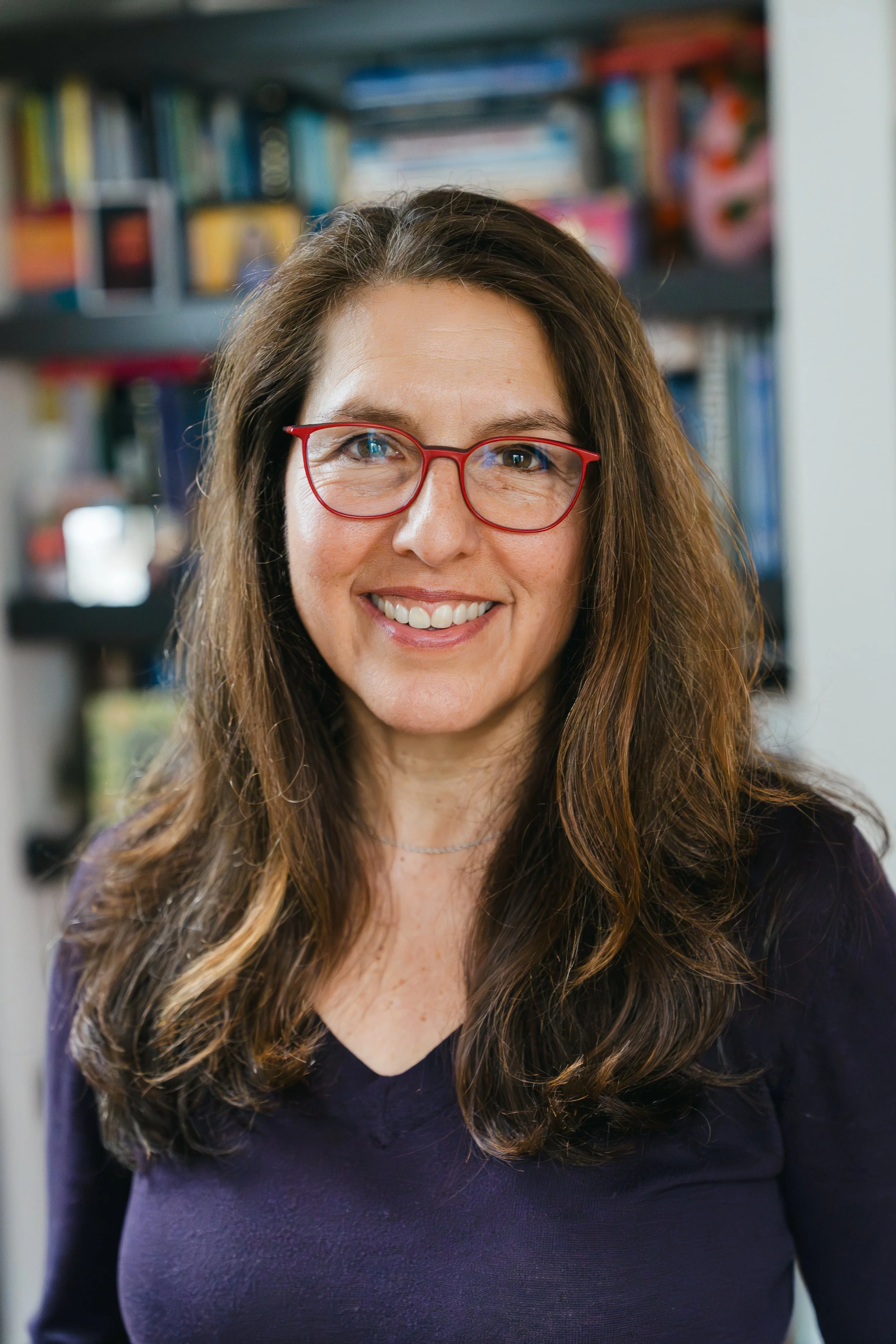
I didn’t initially set out to specialize in eating disorders—but early in my training, I found myself drawn into the work in a way that felt immediately compelling, and deeply right.
In the mid-1990s, I began working with Dr. Ruth Striegel-Weissman, a leading researcher in the field. Early in that experience, I had the opportunity to receive direct training in the Eating Disorder Examination (EDE) with its developer, Dr. Christopher Fairburn, alongside a multidisciplinary group of researchers and clinicians. Being immersed in that environment—learning alongside people whose work was shaping the field—clarified something almost immediately for me. I had found work I could stay deeply engaged in over time.
More than 30 years later, that has proven to be true.
Eating disorders have been a central thread throughout my career, across research, teaching, hospital-based work, consultation, and private practice. My work in each of these roles has helped me develop a broader and more nuanced understanding of how these conditions develop, persist, and change.
Over the years, I have developed a very close familiarity with how eating disorders operate—their patterns, their logic, and the often subtle ways they show up in language, behavior, and even in what goes unsaid. Many clients have shared that it can feel both surprising and relieving to have those patterns recognized and named so clearly. That kind of attunement has become central to how I work.
My work is grounded in evidence-based approaches, and also shaped by an appreciation for the complexity of human experience—recognizing that meaningful change often involves more than applying techniques, and instead requires careful attention to the individual, the context, and what unfolds in the therapeutic process.
What continues to be so incredibly meaningful to me is the opportunity to sit with people as they begin to disentangle from patterns that have taken hold in their lives. To help them face what is true, as well as what has never been real. And to support them in reconnecting with themselves in a more stable, flexible, and sustainable way.




Fearless
Meaningful change often involves moving toward the things that feel difficult or uncertain, not away from them. My role is to be a steady, grounded presence at your side as we do that—helping you stay with what’s true, while never asking you to face it alone.

Real
I try to be real with my clients. That means being open, reflective, and willing to take responsibility when I’ve missed something or perhaps pushed too hard. I’m here as your therapist, but also as a real person—because that kind of honesty helps create a space where meaningful work can unfold.

Compassionate
I approach this work with a deep sense of compassion for the full range of human experience—including the thoughts, behaviors, and parts of yourself that may feel hardest to talk about. Over time, this often creates space for you to begin relating to yourself with that same compassion.

-
BA in Psychology and Spanish, University of Wisconsin at Madison, 1993
MA in Psychology (mentor: Dr. Ruth Striegel-Weissman), Wesleyan University, 1995
MA thesis: A Natural Course and Outcome Study of Binge Eating Disorder in a Community Sample
PhD in Clinical Psychology (mentor: Dr. Linda Craighead), University of Colorado-Boulder, 2003
PhD dissertation: Appetite-Focused Cognitive Behavioral Therapy for the Early Intervention of Binge Eating Disorder
Postdoctoral Associate, Yale University School of Medicine (mentor: Dr. Carlos Grilo), Eating Disorders & Weight Research Program, 2003-2005
Licensed Psychologist in Oregon (#1778) & Washington (PY 61617438)
-
Cachelin, F. M., Striegel-Moore, R. H., Elder, K. A., Pike, K. M., Wilfley, D. E., & Fairburn, C. F. (1999). Natural course of a community sample of women with binge eating disorder. International Journal of Eating Disorders, 25, 45-54.
Elder, K. A., Buckner, A., Craighead, L. W., Niemeier, H. M., & Pung, M. A. (2003, May). Appetite-focused CBT for early intervention of binge eating disorder. Paper presented at the annual meeting of the Academy for Eating Disorders, Denver, CO.
Elder, K. A., Grilo, C. M., Masheb, R. M., Rothschild, B. S., Burke-Martindale, C. H., Brody, M. (2005, April). A comparison of two self-report instruments for assessing binge eating in bariatric surgery candidates. Paper presented at the Society of Behavioral Medicine Annual Conference, Boston, MA.
Elder, K. A. & Grilo, C. M. (2007). The Spanish language version of the Eating Disorder Questionnaire: Comparison with the Spanish language version of the Eating Disorder Examination and test-retest reliability. Behaviour Research & Therapy, 45, 1369-1377.
Elder, K. A., Paris, M., Añez, L. M. Grilo, C. M. (2008). Loss of control over eating is associated with eating disorder psychopathology in a community sample of Latinas. Eating Behaviors, 9, 501-503.
Mitchell, J. E., King, W. C., Courcoulas, A., Dakin, G., Elder, K. A., Engel, S., … Wolfe, B. (2015) Eating behavior and eating disorders in adults prior to bariatric surgery. International Journal of Eating Disorders, 48, 215-222.
Elder, K., & Seawell, A. (2021). Using spontaneity and flow to enhance learning and engagement in the classroom. In H. Scherschel (Ed.) Teaching Tips: A Compendium of Conference Presentations on Teaching, 2019-20. (pp. 17-18).
-
Funded as Principal Investigator on a National Institutes of Health (NIH)–supported clinical trial for my doctoral dissertation: Appetite-Focused Cognitive Behavioral Therapy for the Early Intervention of Binge Eating Disorder.
Investigator and Co-Investigator on additional NIH- and university-funded research examining eating disorders and related health outcomes.